
You pull a box of cereal off the shelf, tilt it toward the bowl, and notice the corner of the bag is chewed through. A few tiny dark specks sit in the bottom of the box. You stand there holding it, trying to remember how long it’s been in the pantry, and what else in that cabinet might have been visited. Ugh.
Or maybe it goes like this. You’ve been away for a week. You walk into the house, set your bags down, and head to the kitchen. There, along the baseboard, is the trap you set before you left, with a mouse in it. A second one is behind the stove. Gross!
Either way, your first thought is probably “what’s wrong with my house?” Nothing’s wrong with your house. It’s just October.
It’s Not Bad Luck. It’s the Calendar.
Every fall, we hear the same story from homeowners across Edison, Westfield, and the towns around us: droppings in a kitchen drawer, a gnawed corner on a box in the garage, a sound in the wall at night that’s new. It feels personal. It isn’t.
Outside, two things are happening at once. The food that kept rodents fed all summer is disappearing, and the open air isn’t a cozy place to be anymore. Mice and rats don’t wait for the first hard frost to start planning ahead. They go looking for somewhere warm, sheltered, and close to food well before winter arrives, and your house checks every box.
Why Some Homes Feel It More Than Others
If you’re in Edison or Westfield proper, this fall shuffle probably already feels familiar. But if you’re in Scotch Plains, Fanwood, or Mountainside, especially on a property that backs up to woods, a park, or any open green space, you’re likely to notice it sooner and more often. Those yards aren’t the problem. They’re just next door to where rodents already live year-round without anyone noticing. Once the weather turns, “outside” becomes “inside,” and the first house with an unsealed gap is the one that gets picked.
So no, it doesn’t mean your home is dirty or neglected. It means it’s fall in New Jersey, and the rodents next door are doing exactly what rodents do.
The Early Signs Worth Paying Attention To
Most people don’t spot a rodent problem by seeing an actual rodent. They notice the evidence around it first:
- Small droppings near baseboards, in pantries, or tucked in a cabinet or drawer
- Gnaw marks on wood, cardboard, stored boxes, or, more concerning, wiring
- Chewed food packaging, especially cereal, pasta, and pet food bags
- Scratching sounds, especially at night, from the walls, attic, or under the floor
- A pet suddenly fixated on one spot in a room or along a wall
- Shredded paper or fabric stuffed into an out-of-the-way corner, a telltale sign of nesting
Any single one of these could be nothing. A couple of them together, especially as the weather cools, deserve real attention.
Why “Just One Mouse” Rarely Stays That Way
It’s easy to assume one sighting means one small, manageable problem. In reality, rodents reproduce fast. By the time you’ve actually seen something, there’s usually more going on behind the walls than what’s showing on the surface. The gap between “I think I saw something” and “there’s clearly a nest somewhere” closes a lot quicker than most homeowners expect. That’s why those early signs matter more than they seem to in the moment.
Why Keeping Them Out Matters More Than You Think
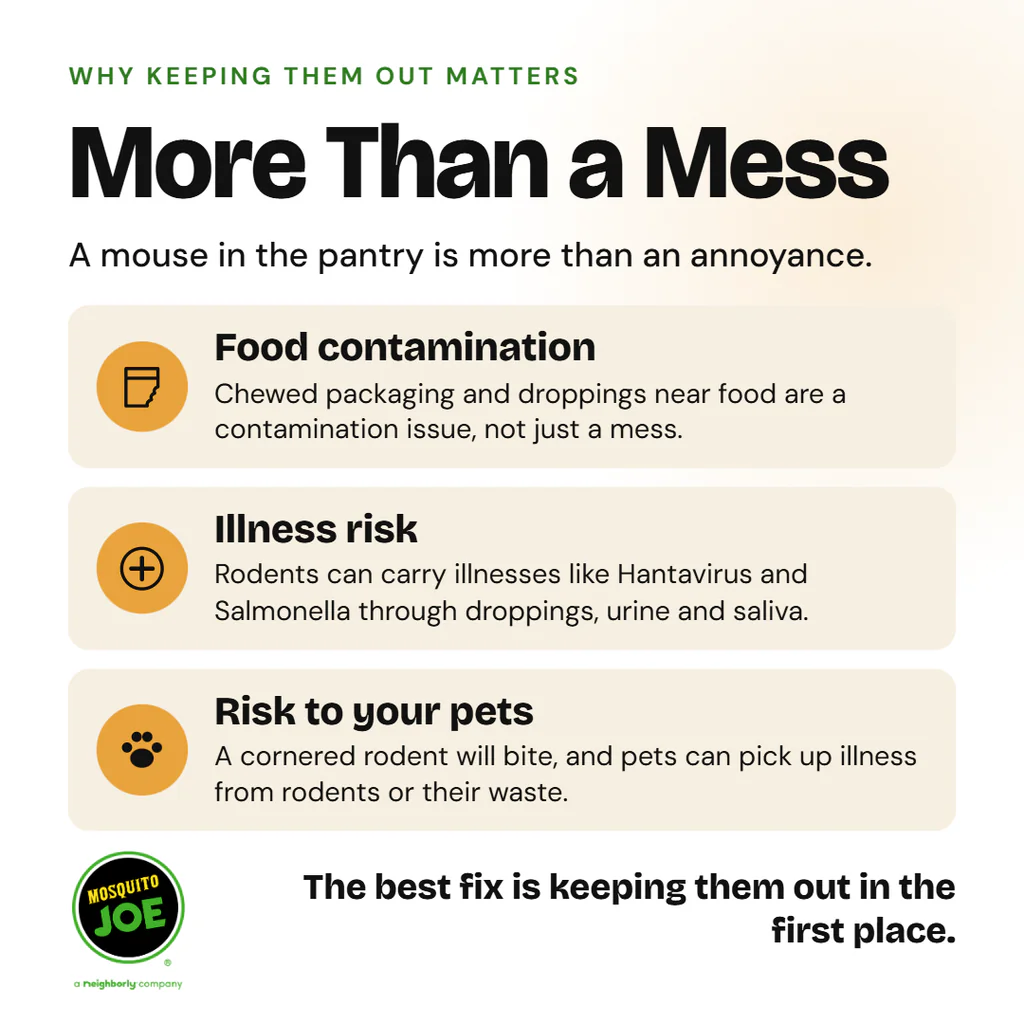
A mouse in the pantry is more than an annoyance. Rodents move through your home with their droppings, urine, and saliva, and that’s how they spread problems you can’t see. They can carry illnesses like Hantavirus and Salmonella, and the risk isn’t limited to direct contact. When droppings and nesting material dry out, particles can get into the air and into the places your family eats, sleeps, and plays. That’s the reason the cereal box scenario is worth taking seriously. Chewed packaging and droppings near food are a contamination issue, not just a mess.
If you find droppings or a trapped mouse, protect yourself. Wear gloves, dampen the area with disinfectant instead of sweeping or vacuuming dry waste, and wash your hands well afterward.
Your pets are part of this too. Cats and dogs are curious, and a rodent that feels cornered will bite. A bite can be painful and can lead to infection, and pets can also pick up illness from contact with rodents or their waste. If your dog or cat has started fixating on a wall or a corner, take it seriously. They often notice a problem before you do.
And the more rodents settle in, the more they chew. Wiring, insulation, and stored belongings all take damage over time, which turns a small problem into a costly one.
What You Can Do Right Now
Before this turns into a bigger project, a few simple steps go a long way:
- Lock down food and trash, pet food included. It’s often the easiest target in a garage or mudroom.
- Clear brush, woodpiles, and overgrown landscaping away from the foundation, since that’s exactly where rodents stage before making the jump indoors.
- Seal the gaps. This one matters most, and it gets its own section below.
These steps lower the odds of a problem starting in the first place. They won’t undo one that’s already underway.
When DIY Stops Being Enough
Traps and store-bought deterrents aren’t a bad place to start, but they tend to hit the same wall every time: they deal with the rodent you can see, not the opening that let it in, or the others that are likely to follow. Set a trap without sealing the entry point and you’ve basically installed a revolving door.
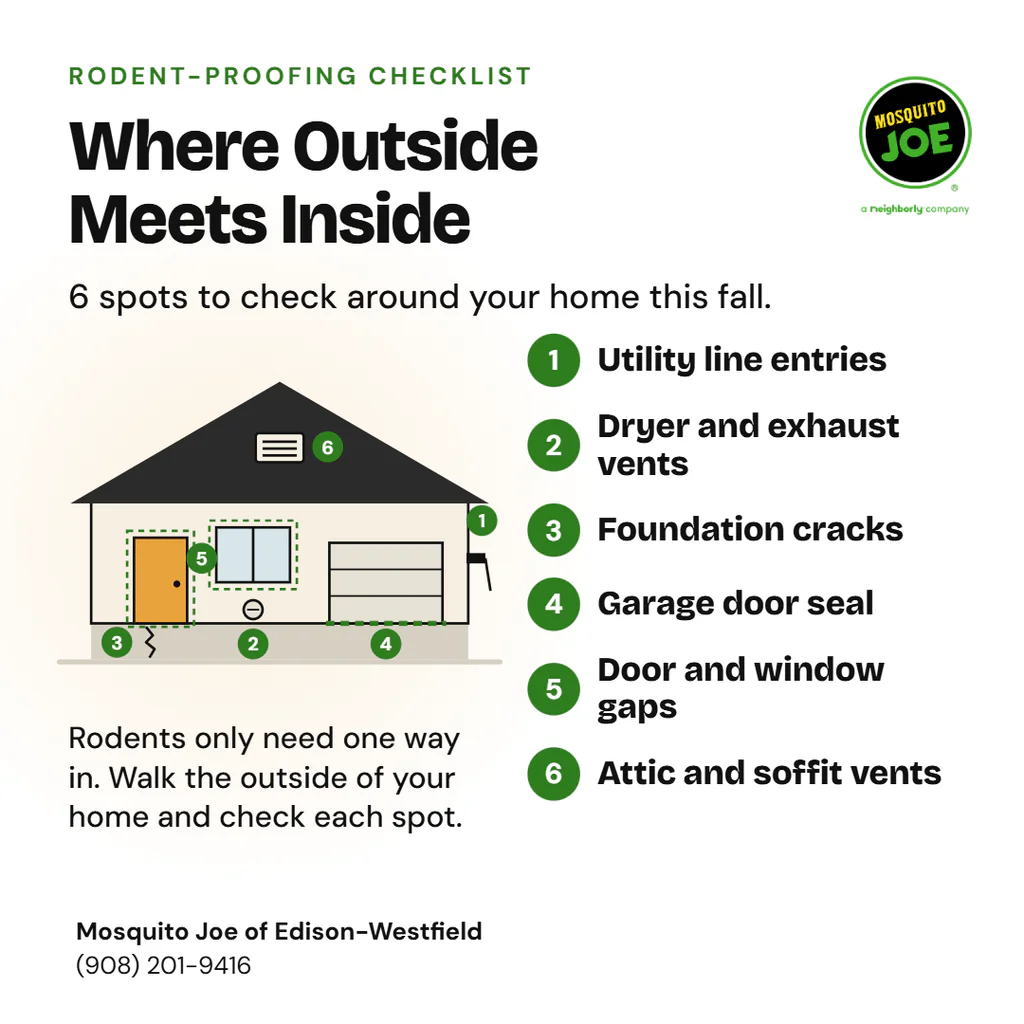
That’s why sealing the gap between outside and inside is the most important thing you can do. A mouse can squeeze through an opening about the size of a dime, and a rat through something not much bigger than a quarter. Walk the outside of your home and look at the places where the outdoors meets the indoors:
- Where utility lines, pipes, and cables enter the house
- Dryer vents and exhaust vents
- Cracks in the foundation and gaps where the siding meets it
- The bottom edge of the garage door and any worn weather seals
- Gaps around doors, windows, and the crawl space or basement access
- Attic and soffit vents
For small gaps, steel wool or copper mesh packed into the opening and sealed with caulk holds up well, because rodents can’t easily chew through it. For larger openings, hardware cloth is the better choice. Expanding foam on its own is a common mistake, since rodents will chew right through it. Door sweeps and fresh weatherstripping close up the gaps that are easy to overlook.
The hard part is finding every entry point, and rodents only need one. They often use spots most homeowners never think to check, like the roofline or the spot where a cable line comes through the wall. It takes a trained eye to catch what most people miss. It also takes the right approach for the animal, since mice and rats don’t behave the same way or respond to the same tactics.
If any of this sounds familiar, it may be worth getting ahead of it with rodent control services in Westfield before the colder months fully set in. A humane, prevention-first approach almost always costs less, and causes a lot less stress, than waiting until the problem is fully established.
If the signs above sound familiar, it may be worth getting ahead of it with rodent control services before the colder months set in – a humane, prevention-first approach tends to cost a lot less than waiting until the problem is fully established.
About the Author
This article was contributed by Mosquito Joe of Edison-Westfield, a locally owned pest control company serving Edison, Westfield, and surrounding New Jersey communities with eco-friendly mosquito, tick, and rodent control services.